
Introduction
Double Crochet Roll Stitch is a decorative stitch that creates a unique rolled texture effect by wrapping the yarn multiple times around the hook. The key technique involves wrapping the yarn around the hook multiple times (typically 5-10 wraps), then pulling through all the loops at once to create a three-dimensional stitch with a curled texture.
The double crochet roll stitch is known as the Bullion Stitch or Roll Stitch in both US and UK terminology. It is an advanced technique in crochet for creating unique 3D textures. By varying the number of wraps, you can achieve effects ranging from short tight curls to long elegant spirals.
The bullion stitch is characterized by its unique texture and strong dimensional quality, making it ideal for:
- Floral textures: Creating 3D flower elements like petals and stamens
- Blanket patterns: Forming regular or random curled textures
- Scarf embellishments: Adding dimensional layers to scarves
- Crochet art: Creating special artistic effects and texture contrasts
Required Tools
Before practicing the double crochet roll stitch, you will need the following tools:
- Crochet hook : A hook with a tapered handle is recommended for easier loop sliding; the hook head should be smooth to prevent loops from getting caught
- Yarn : Choose medium-weight, smooth cotton or acrylic yarn; avoid fuzzy or textured yarns
- Chain stitch foundation: Roll stitches need to be worked on a chain foundation
- Double crochet basics: The roll stitch motion is similar to double crochet, so master double crochet first
Preparation for Practice
Before practicing the bullion stitch, crochet a foundation chain of about 15-20 stitches. Beginners should start with fewer wraps (5-6) and gradually increase to 8 or more as they become proficient. Using a smooth hook is very important - rough surfaces will cause loops to catch and make sliding difficult.
Step-by-Step Instructions
1Step 1
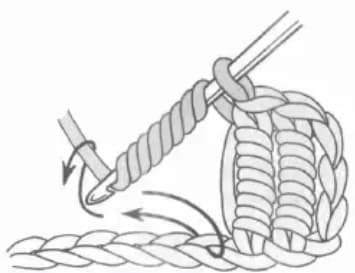
Wrap the yarn evenly around the hook 8 times. Make sure each wrap has consistent tension - not too tight to make pulling through difficult, and not too loose to cause tangled loops. After wrapping, insert the hook into the target stitch following the arrow direction, then yarn over to prepare for pulling through. This is the most critical step of the roll stitch - the quality of wrapping directly determines the final result.
2Step 2
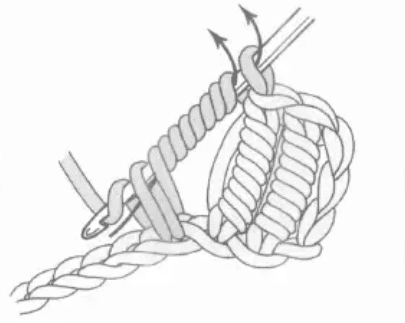
Yarn over and pull through, being careful not to let the multiple wrapped loops slip off the hook. Then yarn over again and pull through both the stitch loop and all the wrapped loops on the hook at once. This step requires some skill and feel - pull evenly and firmly to let all loops slide over together. Finally, yarn over once more and pull through the remaining two loops to complete the stitch.
3Step 3
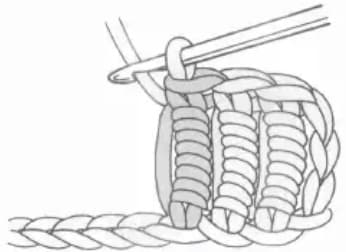
The double crochet roll stitch is complete. You can see the stitch displays a distinct rolled texture effect. By adjusting the number of wraps, you can control the stitch length and curl intensity: more wraps create longer, more pronounced curls; fewer wraps create shorter, tighter curls. Generally, 5-6 wraps produce short curl effects, while 8-10 wraps produce long curl effects.
Tips
Even Wrapping is Key
The key to a successful bullion stitch lies in even wrapping. Suggestions: maintain equal spacing between each loop without overlapping; keep moderate tension while wrapping - too tight makes pulling through difficult, too loose causes messy loops; you can make a small mark on the hook to help maintain consistent positioning for each wrap. Beginners can use their fingers to help position wraps, and develop the feel with practice.
Choose the Right Hook
Not all hooks are suitable for bullion stitches. Recommendations: choose hooks with smooth, burr-free heads; tapered handle designs help loops slide over easily; metal hooks are typically smoother than plastic or wooden ones. If you find loops constantly catching, your hook may not be smooth enough - consider upgrading to a better quality hook.
Control Your Pulling Speed
When pulling through all loops at once, speed and tension are important. Suggestions: after yarning over, pull slightly tighter first to ensure all loops are close together; then pull through all loops with a steady, even speed; if you get stuck midway, don't force it - gently wiggle the hook to help loops slide. After a few practice rounds, you'll find the right tension and rhythm.
Common Mistakes
The loops won't pull through and get stuck in the middle. What should I do?
Loops getting stuck is usually caused by wrapping too tightly or using a hook that isn't smooth enough. Solutions: start over and wrap slightly looser; check if your hook has burrs and replace if necessary; before pulling through, gently press the loops to make them more compact; you can apply a tiny amount of hand lotion to lubricate the hook (be careful not to get it on the yarn).
The completed roll stitch has an uneven shape. What should I do?
Uneven shapes are usually caused by uneven wrapping. Solutions: maintain consistent spacing between each wrap, avoiding some tight and some loose; check that all loops are neatly arranged before pulling through; after completing, gently adjust the curled shape with your fingers; practice more to develop a feel for even wrapping.
The roll stitches have inconsistent heights. What should I do?
Inconsistent heights affect the overall appearance. Solutions: maintain the same number of wraps for each stitch; pay attention to consistent positioning on the hook while wrapping; after completing, check each stitch's height and redo those with significant differences; pause briefly after each stitch to confirm the height is correct before moving to the next.
Variations and Applications
The double crochet roll stitch has several variations you can choose from:
- Short Roll Stitch: Wrap 5-6 times for a short, tight curled effect
- Long Roll Stitch: Wrap 10-15 times for an elegant, flowing curled effect
- Roll Stitch Flower: Multiple roll stitches arranged around a center to form a flower pattern
- Roll Stitch Border: Crochet roll stitches along fabric edges for decorative borders
- Roll Stitch Combinations: Combine with other stitches to create complex textures
Related Stitches
After mastering the double crochet roll stitch, you can continue learning:
- : The foundational stitch motion for roll stitches
- : Connections between roll stitches
- : Another technique for creating 3D textures
- Popcorn Stitch: Combining multiple stitches to form a 3D ball effect
Practice Suggestions
Intermediate crocheters should practice the double crochet roll stitch following these steps:
- First crochet about 20 chain stitches as a foundation
- Start practicing with 5 wraps to get familiar with pulling through all loops
- Gradually increase to 8 wraps, then 10 wraps as you become proficient
- Try creating simple flower patterns with roll stitches
After completing practice, you can try simple projects: 3D flower decorations, roll stitch motifs, or as scarf edge embellishments. These projects help reinforce roll stitch techniques while experiencing the unique design possibilities of this special texture.
The double crochet roll stitch (bullion stitch) is an advanced crochet technique for creating unique 3D textures. While it requires some practice to master, once proficient, it adds distinctive artistic effects to your work. Keep practicing and enjoy the joy of creation!