
Introduction
Double crochet (dc) is one of the most frequently used basic stitches in crochet and an essential skill for beginners to master. A double crochet stands approximately three chains tall, creating fabric that is soft, breathable, and flexible-perfect for shawls, scarves, sweaters, and other items that require a soft drape.
In American terminology, this stitch is called Double Crochet, abbreviated as dc. In British terminology, it's called Treble Crochet, abbreviated as tr. This terminology difference is common in crochet, so when reading English patterns, always check whether they use US or UK terminology to avoid confusion.
Double crochet is characterized by its taller height and more open texture. One double crochet occupies approximately the height of three chains, so it works up faster than single crochet and covers larger areas quickly. The open mesh effect created by double crochet makes it excellent for lightweight spring and summer projects, and it's also the foundation stitch for lace patterns and grid designs.
In diagrams, double crochet is typically represented by a T-shaped symbol or a T with a diagonal line. Once you master double crochet, you can create classic patterns like the Granny Square and progress to more complex variations, creating rich visual effects.
Tools You'll Need
Before practicing double crochet, gather the following tools:
- Crochet hook : Beginners should use a 3.0mm or 3.5mm hook, which is a comfortable size for learning
- Yarn : Choose medium-weight cotton or acrylic yarn in a light color so you can easily see the stitch structure
- Chain stitch foundation: Double crochet is worked on a foundation chain, so master the chain stitch first
Practice Preparation
Before practicing double crochet, make a foundation chain of about 15-20 chains. The first row of double crochet starts in the 4th chain from the hook (skipping the first 3 chains as the turning chain), so you need at least 4 chains minimum.
Step-by-Step Instructions
1Step 1
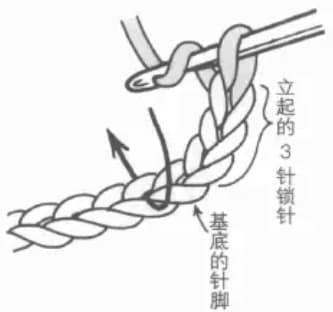
First, yarn over once on your hook. This is the key difference between double crochet and single crochet-double crochet requires a yarn over first to add height. Then skip the 3 chains closest to the hook (these 3 chains serve as the turning chain, equivalent to one double crochet in height) and insert your hook into the 4th chain from the hook. You can insert under both strands of the V-shape, or under just one strand plus the back bump.
2Step 2
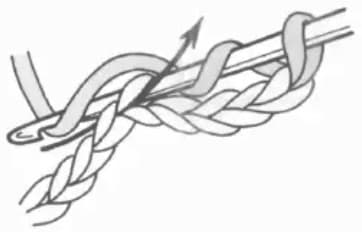
After inserting, yarn over again on your hook, then pull the hook with the yarn back through the chain. At this point, you have three loops on your hook: the original loop, the loop from the yarn over, and the new loop just pulled through. Keep all three loops on the hook without letting them slip off or cross each other.
3Step 3
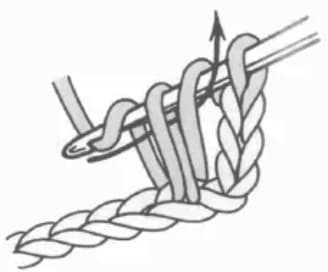
Yarn over again (now there are four loops on the hook), then pull through the first two loops on your hook. This step merges the first two loops into one, leaving two loops on the hook. Note: Double crochet is completed in two draw-through steps-first through the front two loops, then through the remaining two. This is the standard method for double crochet.
4Step 4
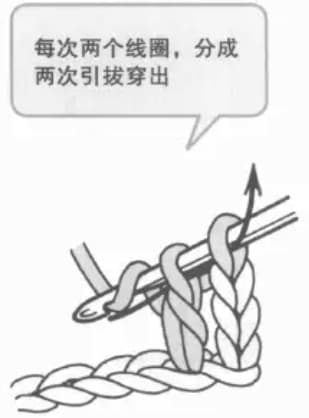
Yarn over one more time (now there are three loops on the hook), then pull through both remaining loops at once. This step merges the two loops into one, completing a full double crochet stitch. Only one loop remains on your hook, ready for the next stitch.
5Step 5
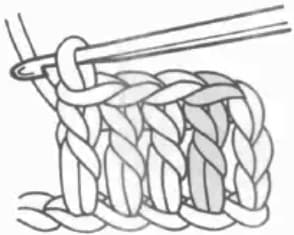
After completing your first double crochet, insert your hook into the next chain (usually the adjacent V-shape). Follow steps 1-4 in order: yarn over and insert, yarn over and pull through, pull through first two loops, pull through remaining two loops, to work your second double crochet. Each completed double crochet creates a tall stitch on the foundation chain. Repeat until you complete the row.
Tips & Tricks
Turning Chain and Counting
Each double crochet row begins with 3 chains as the turning chain. These 3 chains equal the height of one double crochet, matching the row height. When counting: whether the turning chain counts as a stitch depends on the pattern. Some patterns count the turning chain as the first double crochet; others don't. Beginners should practice with the turning chain NOT counted as a stitch, keeping the actual stitch count consistent across rows.
Proper Yarn Over Technique
Yarn over (YO) is the key operation in double crochet. The correct method: bring the yarn from back to front over the hook, creating a new loop. A common mistake is yarn over in the wrong direction, causing twisted loops or difficulty pulling through. When practicing, maintain a consistent yarn over direction and check that the loop sits correctly on the hook each time.
Keeping Loops Stable
Double crochet involves multiple loops on the hook, which can slip off or cross. The trick: after each yarn over, slightly tighten to keep loops close to the hook; maintain steady tension when pulling through, not too fast or rough; use your index and middle fingers to help stabilize loop positions. With practice, these movements become smooth and natural.
Common Mistakes
My double crochets are uneven in height-some tall, some short. What should I do?
Uneven double crochet height usually comes from inconsistent tension when pulling through or loose loops. Solution: maintain the same tension each time you pull through loops to keep stitch height consistent; after completing a stitch, check if it's pulled to the proper height; slow down during practice and focus on tension control for each step. Even height makes your work more attractive and easier to work subsequent rows.
My stitch count changes each row-ending up with more or fewer stitches. What's wrong?
Stitch count changes in double crochet rows have similar causes to single crochet-usually missed stitches or working into the same stitch twice. Additionally, how you handle the turning chain affects counting. Solution: count stitches after completing each row; when turning work, confirm the position of the first stitch (the one next to the turning chain, or in the turning chain's base); use stitch markers to mark the first and last stitches of each row. Develop the habit of counting every row to prevent work from becoming distorted.
I get confused with too many loops on my hook. How do I keep track?
Double crochet requires managing multiple loops, which can confuse beginners. Solution: remember the standard double crochet flow-after yarn over and insert, you have 3 loops; after pulling through first 2, you have 2 remaining; pull through the final 2 to complete; after each step, check how many loops remain on the hook; if loops slip or cross, you can start that stitch over. With practice, these steps become muscle memory.
My edges are slanted or uneven. How do I fix this?
Uneven edges may come from improper turning chain handling or wrong insertion points. Row beginning issues: wrong number of turning chains (should be 3), or forgetting the turning chain entirely; row ending issues: inserting in the wrong spot for the last stitch, possibly in the turning chain or skipping the last stitch. Solution: always start each row with 3 chains for turning; at row end, confirm the last stitch is directly above the previous row's last stitch; use stitch markers to mark edge stitches.
Related Stitches
After mastering double crochet, continue learning these stitches:
- : A shorter, denser basic stitch
- : Between single and double crochet in height, one yarn over but completed in one step
- : Two yarn overs, an even taller stitch
- Double Crochet Increase: Two double crochets in the same stitch to add stitches
- Double Crochet Decrease: Merging two adjacent stitches into one double crochet to reduce stitches
Practice Suggestions
Beginners should practice complete rows of double crochet until it feels smooth. Practice steps:
- First, chain about 20 stitches as a foundation
- Starting from the 4th chain from hook, work one row of double crochet (skip first 3 chains as turning chain)
- Turn work, chain 3 for turning chain, then work the second row of double crochet
- Repeat until each row has consistent stitch count and even stitches
After completing practice, try simple projects: Granny Square, simple shawl, or mesh coaster. These projects help reinforce double crochet skills while building confidence and a sense of accomplishment.
Double crochet is a core crochet skill-master it and you can create countless wonderful projects like Granny Squares, lace patterns, and more. Keep practicing and enjoy the joy of creation!