
Introduction
Double Crochet Cross Stitch is a stitch technique that creates a cross-shaped decorative effect through two double crochet stitches crossing at a center point. The core technique involves wrapping yarn twice around the hook before inserting into a chain stitch, then pulling through loops multiple times, combined with chain stitches and double crochet to form a unique cross-cross texture.
In American terminology, this is called Double Crochet Cross Stitch, and in British terminology, it has the same name. It is a fundamental technique for creating cross-shaped decorative patterns in crochet, commonly used in lace edging, pattern work, and decorative borders.
The double crochet cross stitch features a three-dimensional texture and regular patterns, making it ideal for:
- Lace edging: Creating delicate cross patterns on blanket and scarf edges
- Pattern work: Serving as a foundational element for complex patterns
- Garment decoration: Adding design interest to sweaters and shawls
- Bag patterns: Adding textural layers to simple bag designs
Required Tools
Before practicing the double crochet cross stitch, prepare the following tools:
- Crochet hook : A 3.5mm or 4.0mm hook is recommended for easier observation of stitch structure
- Yarn : Choose medium-weight cotton or acrylic yarn in bright colors for easy identification
- Chain stitch foundation: The cross stitch needs to be worked on a chain foundation
- Double crochet basics: The cross stitch consists mainly of double crochet, so master the double crochet method first
Preparation for Practice
Before practicing the double crochet cross stitch, crochet a row of about 20-25 chain stitches as a foundation. The cross stitch requires some width to display its cross texture effect. Beginners should use stitch markers to mark stitch positions for easier positioning.
Step-by-Step Instructions
1Step 1
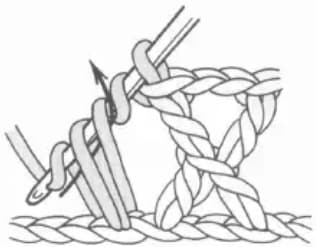
First, wrap the yarn around the hook twice. This is the key starting point of the cross stitch-wrapping one more time than a regular double crochet creates a taller stitch height. Then insert the hook into the specified chain stitch, yarn over and pull through. At this point, there are multiple loops on the hook. Yarn over again and pull through two loops as shown by the arrow-this completes the first step.
2Step 2
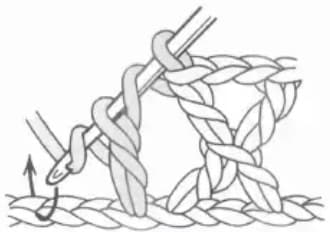
Yarn over on the hook, and insert the hook into the 3rd chain stitch as shown by the arrow. This step is key to positioning the cross stitch-you need to accurately find the position of the 3rd chain stitch. After inserting, yarn over again and pull through. At this point, multiple loops have accumulated on the hook, preparing for the sequential pull-throughs to follow.
3Step 3
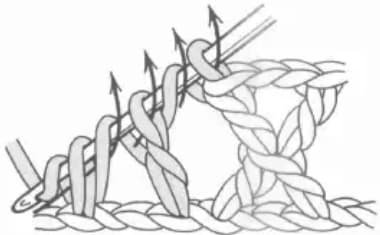
Continue to yarn over on the hook, and pull through two loops at a time as shown by the arrow. This process needs to be repeated four times, gradually reducing the number of loops on the hook. This is the key step in forming the cross stitch's unique structure-through sequential pull-throughs, creating richer textural layers than a regular double crochet.
4Step 4
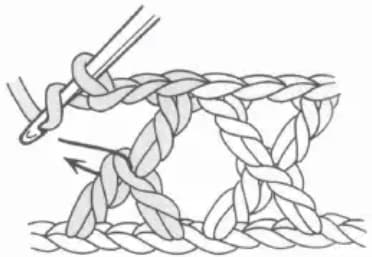
Chain 2-this is an important component of the cross stitch. The chain stitches form a connection point at the center of the cross. Then yarn over on the hook, and insert the hook to the specified position as shown by the arrow. Yarn over and pull through. This step completes the preparation for the horizontal structure of the cross stitch.
5Step 5
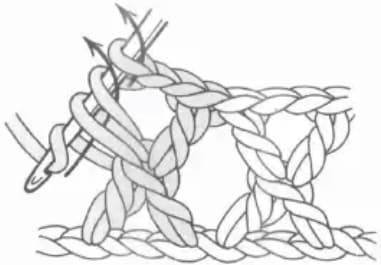
Pull through two loops on the hook at a time as shown by the arrow, twice total, to complete one double crochet. At this point, the double crochet cross stitch is fully complete-the vertical structure formed by wrapping twice combines with the horizontal structure formed by chain stitches and double crochet to create a complete cross-cross texture.
Tips
Understanding the purpose of wrapping twice
The double crochet cross stitch begins by wrapping yarn twice around the hook, which is an important difference from regular double crochet. The extra wrap makes the stitch taller, creating a more pronounced three-dimensional effect. When wrapping, maintain moderate tension-too tight will make subsequent pull-throughs difficult, while too loose will affect the neatness of the cross shape.
Accurately locating the third chain stitch
Step 2 requires inserting into "the 3rd chain stitch," which requires accurate counting. Suggestions: count backwards 3 stitches from the current position; use your finger to hold the target stitch; use stitch markers to pre-mark important positions. Positioning errors are the most common issue for beginners, so count carefully.
Maintaining pull-through rhythm
Step 3 requires pulling through loops four times total, so maintaining a steady rhythm is important. Suggestions: confirm that the loop count decreases by two after each pull-through; keep the hook angle consistent; avoid going too fast which can cause uneven loops. With practice, you'll develop a natural pull-through rhythm.
Common Mistakes
What to do if pull-through is difficult after wrapping twice?
After wrapping yarn twice, there are many loops on the hook, and pulling through may feel difficult. Solutions: maintain moderate tension when wrapping, not too tight; before pulling through, gently adjust loop positions; use a slightly larger hook for practice. If still difficult, practice regular double crochet first to find the right tension feel.
What to do if I can't find the 3rd chain stitch position?
Positioning errors are a common issue with cross stitch. Solutions: use stitch markers to pre-mark every 3rd stitch position; count backwards from the current position; use your finger to count stitches one by one to confirm. Remember the principle: "don't count the current position, count backwards 3 stitches."
What to do if the cross shape is uneven?
If the cross shape is uneven after completing the stitch, it's usually a tension issue. Solutions: check whether the tension was moderate when wrapping twice; confirm the correct number of loops pulled through in each step; after completion, gently adjust the shape. After a few practices, you'll find the right tension control.
Variations and Applications
The double crochet cross stitch has several variations to choose from:
- Continuous cross stitch: Repeating to form continuous cross patterns
- Size variations: Changing the number of wraps to adjust cross size
- Color combinations: Using different colored yarns to create colorful crosses
- Combination with other stitches: Combining cross stitch with other stitches to create complex patterns
Related Stitches
After mastering the double crochet cross stitch, you can continue learning:
- : The foundational stitch for cross stitch
- : An important component of cross stitch
- : Another cross-texture technique
Practice Suggestions
Intermediate crocheters should practice the double crochet cross stitch following these steps:
- First crochet about 25 chain stitches as a foundation
- Get familiar with the feeling of wrapping yarn twice
- Start practicing with a single cross stitch
- After becoming proficient, try continuous cross patterns
After completing practice, you can try simple projects: decorative edging, pattern samples, or as decorative borders on projects. These exercises help consolidate cross stitch techniques while experiencing the design variations that cross textures bring.
The double crochet cross stitch is an important technique for creating cross decorative patterns in crochet. Master it, and you can add delicate pattern effects to various projects. Keep practicing and enjoy the fun of creating!