
Introduction
Crossed Double Crochet is a decorative stitch that creates dimensional texture through crossed crochet work. The core technique involves skipping the current stitch, first crocheting a double crochet in the next stitch position, then returning to crochet a double crochet in the skipped stitch position, with the two double crochets creating a crossed effect.
The double crochet cross stitch is called Crossed Double Crochet or Cross Stitch in American terminology, and the same name in British terminology. It is a foundational technique in crochet for creating crossed textures and cable patterns. By changing the crossing direction and stitch combinations, you can derive many rich pattern variations.
The double crochet cross stitch features dimensional texture and regular patterns, making it ideal for:
- Sweater textures: Creating classic crossed patterns on sweater fronts
- Blanket borders: Forming regular dimensional wave patterns
- Scarf patterns: Adding dimension and design interest to scarves
- Bag decorations: Adding texture layers to simple bag designs
Required Tools
Before practicing the double crochet cross stitch, you need to prepare the following tools:
- Crochet hook : A 3.5mm or 4.0mm hook is recommended for easier observation of stitch structure
- Yarn : Choose medium-weight cotton or acrylic yarn in a bright color for easy identification
- Chain stitch foundation: Cross stitches need to be worked on a chain foundation
- Double crochet basics: Cross stitches are mainly composed of double crochets, so please master the double crochet method first
Practice Preparation
Before practicing the double crochet cross stitch, crochet a row of about 20-25 chain stitches as a foundation chain. Cross stitches need a certain width to display their crossed texture effect. Beginners are advised to use stitch markers to mark stitch positions for easier positioning.
Step-by-Step Instructions
1Step 1
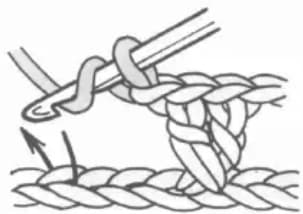
Yarn over on the hook, and following the arrow direction in the diagram, skip the chain stitch that should currently be crocheted, and insert the hook into the next chain stitch. Then yarn over again on the hook and pull the yarn through. This is the critical first step of the cross stitch-creating the base position for crossing by skipping a stitch.
2Step 2
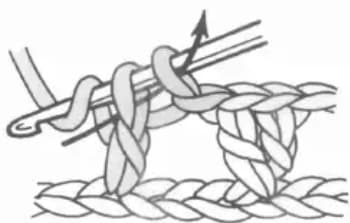
After completing the pull through, there are 3 loops on the hook. Yarn over, pull through the first two loops, completing the first part of the double crochet. Yarn over again, and following the arrow direction, pull through the remaining two loops to complete this double crochet. You have now completed the first double crochet in the "next stitch" position.
3Step 3
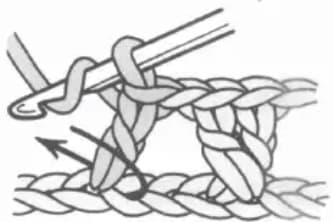
Yarn over, and following the arrow direction, insert the hook into the stitch that was skipped in step 1 (the previous stitch position). Note that the hook should pass behind the completed double crochet, this creates the crossed effect. After yarning over, the hook will "wrap around" the just-completed double crochet, then pull the yarn through.
4Step 4
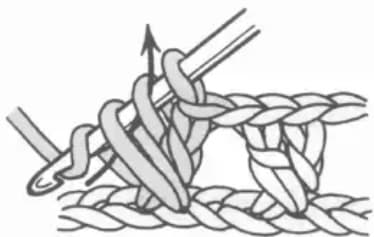
At this point there are 3 loops on the hook. Yarn over again, and following the arrow direction, pull through the first two loops. This step completes the first half of the second double crochet in the crossed position.
5Step 5
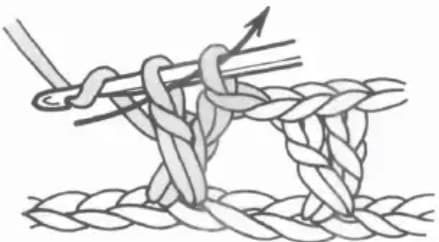
Finally, yarn over and following the arrow direction, pull through the remaining two loops to complete the second double crochet. At this point, the two double crochets form a cross-the one crocheted later crosses over the front of the one crocheted first, creating the classic crossed texture. One double crochet cross stitch is complete.
Tips
Understanding Crossing Direction
The double crochet cross stitch has two directions: right cross (back stitch on left, front stitch on right, crossing diagonally to the lower right) and left cross (back stitch on right, front stitch on left, crossing diagonally to the lower left). This article introduces the right cross direction. Once proficient, you can try left cross-alternating between the two directions creates richer patterns.
Maintain Even Tension
Cross stitches tend to have tension issues because they need to span across stitches. Suggestions: don't make the yarn over too tight after skipping a stitch, or the crossed effect will be distorted; after completing the first double crochet, maintain moderate tension before crocheting the second; check after each set of crosses that both double crochets are the same height.
Counting and Rhythm
Cross stitches can easily disrupt counting rhythm. Suggestions: use stitch markers to mark positions every 5-10 stitches; confirm correct count after completing each set of crosses; maintain a steady crocheting rhythm to avoid errors from rushing.
Common Mistakes
The crossing direction is wrong-the cross goes in the opposite direction. What should I do?
Wrong crossing direction is usually caused by mixing up the skipped stitch position or insertion position. Solution: remember the mantra "skip the next stitch first, then return to the previous stitch"; after skipping, crochet on the right side (next stitch) first, then return to the left side (skipped stitch) to crochet; if the direction is wrong, unraveling and redoing takes less time than forcing it to continue.
The crossing point is too tight or too loose. What should I do?
Tension issues are the most common problem with cross stitches. Too tight makes the crossing point "bulge," too loose makes it "collapse." Solutions: keep the yarn over slightly looser after skipping a stitch; don't pull the first double crochet too tight; when completing the second double crochet, check that both stitches fit well together. After practicing a few sets, you'll find the right tension.
I don't know which stitch to skip and which one to return to. What should I do?
Positioning errors are the most common mistake beginners make. Solutions: use two different colored stitch markers-one to mark "the stitch to skip" and one to mark "the stitch to crochet"; immediately mark the next set's position after completing a set of crosses; you can use your finger to hold down the skipped stitch to prevent forgetting its position.
Variations and Applications
The double crochet cross stitch has many variations that you can choose from:
- Left Cross Double Crochet: After skipping a stitch, crochet first on the left side, then return to the right side-the crossing direction is reversed
- Half Double Crochet Cross: Use half double crochet instead of double crochet for a more compact cross
- Crossed Stitch Combinations: Multiple consecutive crosses form cable patterns
- Cross + Chain Space: Combine cross stitches with chain spaces to create openwork patterns
- Double Cross: Cross twice after two crossed stitches to form more complex textures
Related Stitches
After mastering the double crochet cross stitch, you can continue learning the following stitches:
- : The foundational stitch for cross stitches
- : The connection between cross stitches
- : Another technique for creating dimensional texture
- Cable Stitch: Classic patterns formed by combining multiple crossed stitch groups
Practice Suggestions
Crocheters with some foundation are advised to practice the double crochet cross stitch following these steps:
- First crochet about 25 chain stitches as a foundation
- For the first row, crochet a row of regular double crochets to get familiar with the rhythm
- For the second row, start trying cross stitches, making a cross every other stitch
- Once proficient, you can try continuous crosses to form cable patterns
After completing practice, you can try simple projects: textured scarves, dimensional motifs, or as sweater edge decorations. These projects help consolidate cross stitch techniques while experiencing the design variations that dimensional texture brings.
The double crochet cross stitch is an important technique for creating dimensional texture in crochet. Mastering it allows you to add rich pattern effects to various projects. Keep practicing and enjoy the fun of creating!