
Introduction
The Double Crochet Back Post is a high relief stitch technique (High Relief Stitch) where you work around the post from the back of the fabric, creating a recessed textured effect. Unlike regular double crochet, the back post method has a unique insertion method that produces more pronounced three-dimensional visual depth.
The double crochet back post is called Back Post Treble Crochet (BPTr) or Back Post Double Crochet (BPDC) in US terminology, an important relief crochet technique. By working around the post of the previous row's double crochet rather than the top of the stitch, the stitch "sinks" into the fabric surface, creating a unique grooved effect.
Double crochet back post is commonly used for:
- Creating high relief textured patterns, such as basket weave and brick wall textures
- Making decorative deep groove lines
- Combining with double crochet front post to create raised and recessed contrast relief patterns
- Crocheting dimensional floral motifs and pattern edges
- Creating relief-effect cushions, blankets, and other home decor items
Required Tools
Before practicing the double crochet back post, you'll need:
- Crochet hook : Recommended 3.5mm to 5.0mm hook, easier to maneuver around taller posts
- Yarn : Medium weight cotton or acrylic yarn, easier to see stitch structure
- basics: Need to master regular double crochet first
- Practice swatch: Recommended to crochet several rows of double crochet as a foundation
Practice Preparation
Before practicing back post stitches, crochet at least 3-4 rows of double crochet as your foundation swatch. Back post stitches require working around the posts of the previous row, and having enough height makes it easier to observe and practice. Double crochet posts are taller than single crochet, providing more room to work, but also require more yarn over control.
Step-by-Step Instructions
1Step 1
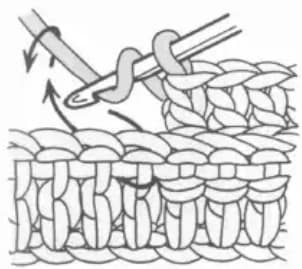
The main difference between double crochet back post and single crochet back post is that you need to yarn over first on the hook. Here's how: First yarn over once on the hook, then insert the hook from the back of the fabric horizontally, going around the post of the double crochet from the previous row. Insert the hook from behind the right side of the post, pass through horizontally, and emerge from behind the left side of the post, creating a "hugging" position around the post. Then yarn over again on the hook, ready to pull through.
2Step 2
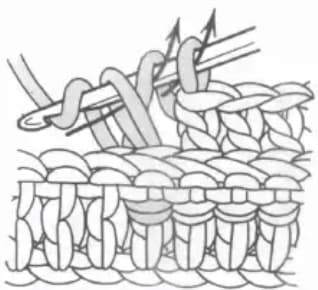
After yarning over, pull the hook with the yarn from behind the post. At this point, you have three loops on the hook. Yarn over again, pull through the first two loops (completing the first pull), leaving two loops on the hook. Yarn over again, pull through the remaining two loops (completing the second pull), finishing one complete back post double crochet. These two pull-through steps are the same as completing a regular double crochet.
3Step 3
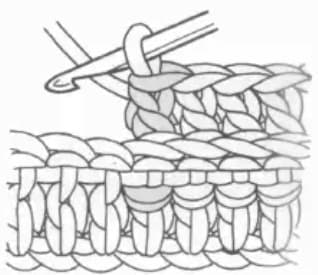
After completing, you can see that the double crochet back post stitch shows a clearly recessed relief effect, "sinking" deeper into the fabric surface. Because double crochet is taller than single crochet, its back post effect is also more pronounced. In contrast, if you use double crochet front post (working around the post from the front), the stitch will rise high above the surface. By combining front post and back post double crochet, you can create very rich high relief textured patterns.
Tips
Controlling Hook Angle
Double crochet posts are taller, so you need to control the hook angle when going around the entire post. It's recommended to tilt the hook slightly so the hook head emerges more easily from behind the post. Keeping the hook at about a 45-degree angle to the fabric reduces friction and makes the movement smoother.
Maintaining Even Loops
Double crochet back post requires multiple yarn overs and pull-throughs, which can easily lead to uneven loop tension. It's recommended to maintain consistent tension with each pull-through, especially on the first yarn over after going around the post. Don't pull too tight or too loose, as this affects the overall evenness of the stitches.
Combining with Front Post Stitches
Double crochet back post is most commonly combined with double crochet front post to create strong raised and recessed contrast effects. Common combinations include: alternating front post and back post stitches to create striped textures; crocheting checkerboard patterns of front and back post stitches to create dimensional grid textures; or mixing them in the same row to create complex geometric patterns. This technique is often used for crocheting blankets with dimensional patterns, cushion covers, and other projects.
Common Mistakes
What if the hook gets stuck when going around the post?
This may be because the double crochet in the previous row was crocheted too tightly, or the hook angle is wrong. Solutions: Maintain appropriate tension when crocheting the foundation rows; adjust the hook angle so the hook head slides out more easily from behind the post; during practice, you can try using a slightly larger hook to help with the maneuvering.
What if the loop count is wrong after the back post stitch?
After completing a double crochet back post, there should be no remaining loops on the hook. If you make a mistake midway, check: whether the pull-through after the first yarn over was done correctly; whether the second pull-through went through two loops; whether any yarn overs or pull-throughs were missed during the entire process. It's recommended to slow down and confirm each step.
What if the double crochet back post height is inconsistent?
Double crochet back post height should be the same as regular double crochet. If there's inconsistent height, it may be due to different tension when going around the post. Solutions: Keep the height consistent when yarning over; maintain the same tension with each pull-through; you can crochet regular double crochet rows before and after the back post row to balance the height.
What if the relief effect of the back post stitch isn't obvious?
The relief effect of double crochet back post should be more pronounced than single crochet back post. If the effect isn't obvious, it may be because: the yarn is too thin or the hook is too large; the insertion isn't deep enough, not completely going around the post; or the fabric overall is too loose. Solutions: Use thicker yarn and a slightly smaller hook; make sure you're going around the entire post, not just picking up part of it; appropriately tighten the tension of the foundation rows.
Related Stitches
After mastering the double crochet back post, you can continue learning these stitches:
- : The foundation stitch for back post techniques
- Single crochet back post: Uses the same technique but with lower height, for more delicate relief effects
- Half double crochet back post: Relief effect between single and double crochet
- Double crochet front post: Working around the post from the front, creating raised high relief effects, used in combination with back post
Practice Suggestions
It's recommended to practice double crochet back post following these steps:
- First crochet a swatch about 15 stitches wide and 4-5 rows high in double crochet
- In a new row, try crocheting back post stitches, remembering to yarn over before inserting
- After completing 3-4 stitches, observe the recessed effect
- Continue practicing the entire row of back post stitches, keeping stitches even
- Try alternating regular double crochet and back post stitches to experience the texture contrast
- Try combining with double crochet front post to create relief patterns
Once proficient, you can try designing complex relief patterns such as diamond grids, wave textures, dimensional floral motifs, etc., creating unique dimensional textured works.
The double crochet back post is an important technique for creating high relief textures. Combined with front post stitches, you can design rich and colorful dimensional patterns. Keep practicing and explore more possibilities!