
Introduction
Half Double Crochet Back Post is a special relief stitch that creates a recessed textured effect by inserting the hook horizontally from behind the stitch post. Unlike regular half double crochet, the back post technique has a unique insertion method where the hook goes around the stitch post from the back of the fabric, causing the stitch to "sink" into the surface and create a distinctive groove effect.
In English, this stitch is called Back Post Half Double Crochet (BPHdc), a type of relief stitch. "Back Post" indicates working from behind the stitch post, as opposed to "Front Post" which works from the front. This technique creates visual dimension by working around the post of the previous row rather than through the top loops.
The half double crochet back post falls between single crochet back post and double crochet back post in terms of height, maintaining the moderate height characteristics of half double crochet while adding the recessed effect of back post stitches, making it a very practical decorative stitch.
Back post stitches are commonly used for:
- Creating dimensional textured patterns like basket weave or brick patterns
- Making decorative grooved lines
- Combining with front post stitches to create raised and recessed relief patterns
- Edge embellishments to add depth to projects
Tools Needed
Before practicing half double crochet back post, you will need:
- Crochet hook : A 3.0mm to 4.0mm hook is recommended for easier maneuvering around stitch posts
- Yarn : Medium weight cotton or acrylic yarn for clear stitch visibility
- basics: You need to master regular half double crochet first
- Practice swatch: It's recommended to crochet several rows of half double crochet as a foundation
Practice Preparation
Before practicing back post stitches, crochet at least 3-4 rows of half double crochet as your foundation swatch. Back post stitches require working around the posts of the previous row, and having sufficient height makes it easier to see and practice. Half double crochet has more height than single crochet, with more visible posts, making it easier to identify insertion points.
Step-by-Step Instructions
1Step 1
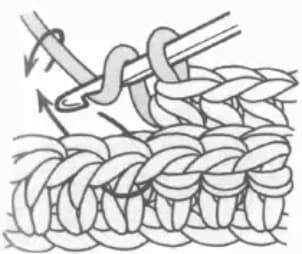
The key to back post stitches is the insertion point. Unlike regular half double crochet which works through the top loops, back post stitches require inserting the hook horizontally from the back of the fabric, going around the post of the half double crochet from the previous row. Here's how: first yarn over, then insert the hook horizontally from the outside (back) of the half double crochet, going around the entire post and emerging from the other side, yarn over again and pull through. At this point you have three loops on your hook.
2Step 2
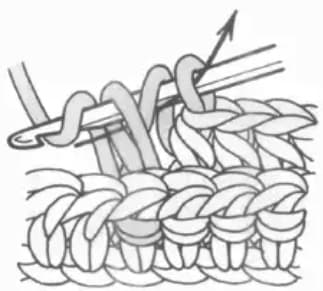
Yarn over, then pull through as indicated by the arrow. This step is similar to completing a regular half double crochet, requiring you to pull through all three loops on the hook at once. Maintain even tension to ensure all loops pass through smoothly. Since you're working from behind the post, the completed stitch will have a recessed effect.
3Step 3
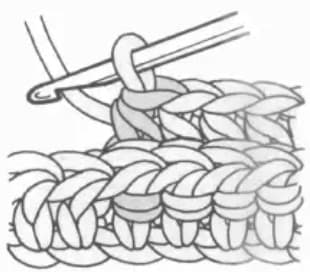
One complete half double crochet back post is finished. You can see the newly worked stitch has "sunk" into the fabric surface, creating a recessed relief effect. In contrast, if using front post stitches (working around the post from the front), the stitch would rise above the surface. By combining front and back post stitches, you can create rich dimensional textured patterns.
Tips
Choosing Insertion Direction
Half double crochet back post requires working around the post horizontally from behind. When inserting, keep your hook roughly parallel to the fabric, inserting from behind the post on the right side (if right-handed), passing through horizontally, and emerging on the left. Half double crochet has moderate height - easier to work than single crochet but requires more precise angle control than double crochet.
Keeping the Fabric Flat
Back post stitches create some fabric contraction. To keep your work flat, alternate regular half double crochets on either side of back post stitches, or intersperse rows of regular half double crochet between back post rows. This balances the fabric tension and prevents excessive shrinking.
Combining with Front Post Stitches
Back post stitches are most commonly combined with front post stitches to create contrasting raised and recessed relief effects. For example: alternating front and back post stitches creates wave patterns; or working in a checkerboard pattern of front and back posts creates grid patterns. Half double crochet's moderate height is ideal for designing such relief patterns.
Common Mistakes
What if the hook is difficult to maneuver around the post?
This may be because the half double crochets in the previous row are too tight. Solution: maintain appropriate tension when working the foundation rows; relax your tension slightly when practicing; if already tight, try using a slightly larger hook or gently compressing the fabric to create more space.
What if the fabric becomes uneven after back post stitches?
Back post stitches change the fabric's tension distribution. Solution: work regular half double crochet rows before and after back post rows to balance tension; keep the tension of back post stitches consistent with regular half double crochet; add regular half double crochet at the edges to stabilize the shape.
What if the relief effect isn't pronounced enough?
The effect of back post stitches is influenced by yarn and hook choice. Using thicker yarn with a slightly smaller hook enhances the relief effect; ensure correct insertion position, truly going around the entire post rather than just part of it; using stiffer cotton yarn produces a more pronounced effect than soft acrylic.
Difference Between Front Post and Back Post Stitches
Front post and back post stitches are two common dimensional techniques. Their main difference lies in the insertion direction:
| Stitch Type | Insertion Direction | Effect | Common Uses | |---------|---------|---------|---------| | Front Post | Around post from front to back | Raised effect on front surface | Pattern relief, border decorations | | Back Post | Around post from back to front | Recessed effect on front surface | Pattern recesses, texture contrast |
These two stitch types are often combined to create rich raised and recessed texture effects, making them important elements in crochet pattern design. Half double crochet's height falls between single and double crochet, capable of producing visible relief effects without being too bulky, making it ideal for everyday project embellishments.
Related Stitches
After mastering half double crochet back post, you can continue learning:
- : The foundation stitch for back post techniques
- Half Double Crochet Front Post: Works around the post from the front, creating raised relief effects
- Single Crochet Back Post: A back post variation using single crochet, with a more subtle recessed effect
- Double Crochet Back Post: A back post variation using double crochet, with more pronounced relief effects
Practice Suggestions
Practice half double crochet back post following these steps:
- First crochet a swatch approximately 15 stitches wide and 4-5 rows high of half double crochet
- In a new row, try working back post stitches, paying attention to insertion points
- After completing 3-4 stitches, observe the recessed effect
- Continue practicing the entire row of back post stitches, keeping stitches even
- Try alternating regular half double crochet with back post stitches to experience texture contrast
Once proficient, try designing simple relief patterns like lines, grids, or waves to create unique dimensional textured pieces.
Half double crochet back post is an important technique for creating dimensional textures. Combined with front post stitches, you can design rich and varied relief patterns. Keep practicing and explore more possibilities!