
Introduction
Twisted Single Crochet is a variation of the single crochet stitch. By twisting the hook during the stitch, the loops become twisted, creating a unique texture effect. Work done with this stitch has a distinct twisted pattern that adds visual dimension and interest.
The main difference between twisted single crochet and regular single crochet is that after yarning over and before pulling through, you need to twist the hook so the two loops become twisted, then pull through both at once. This extra twisting step gives the stitch its unique directional and textural character.
This stitch is suitable for:
- Creating textured surface patterns
- Making decorative edges with special visual effects
- Adding depth to crochet patterns
- Combining with regular single crochet for contrast effects
Tools Needed
Before practicing twisted single crochet, prepare the following tools:
- Crochet hook : A 3.0mm or 3.5mm hook is recommended for easier twisting motion
- Yarn : Choose medium-weight cotton yarn in a bright color to better see the twisted effect
- foundation: You need to master regular single crochet first
Learning Tip
Twisted single crochet builds on the single crochet foundation. If you haven't mastered single crochet yet, we recommend learning that tutorial first to become familiar with the basic insertion, yarn over, and pull through motions.
Step by Step Instructions
1Step 1
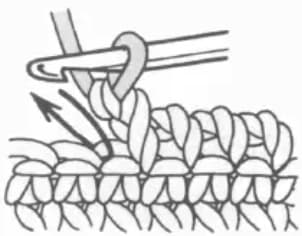
Starting from a chain or previous row, insert hook as shown by the arrow. Insert in the same position as a regular single crochet, going through the V-shaped top (two strands). After inserting, yarn over and pull up a loop. You now have two loops on your hook.
2Step 2
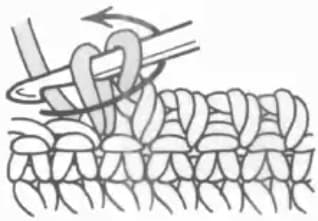
This is the key step for twisted single crochet. Unlike regular single crochet where you simply pull through, here you need to rotate the hook in the direction shown by the arrow so the two loops on the hook become twisted and crossed. Maintain this twisted position and prepare for the next step.
3Step 3
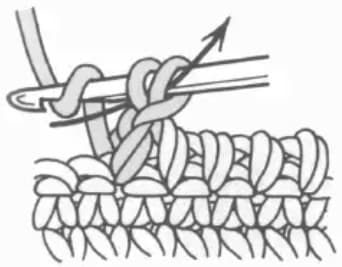
While maintaining the twisted position of the loops, yarn over again. Then, as shown by the arrow, pull the hook with the yarn through both twisted loops at once. This merges the two loops into one, completing one twisted single crochet.
4Step 4
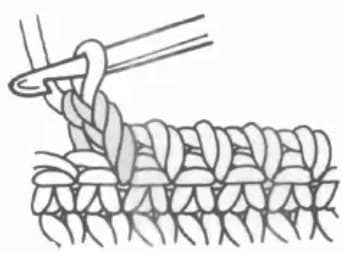
After completing one twisted single crochet, one loop remains on the hook. Insert into the next stitch and repeat the complete process from steps 1-3. Each twisted single crochet creates a small twisted texture on the surface. A full row creates a unique diagonal texture effect.
Tips
Controlling Twist Tension
When twisting the hook, use moderate pressure. Too light and the twist effect may not be visible; too heavy and the loops may deform or fall off. Practice on a swatch first to find the twisting pressure that works for you.
Maintaining the Twist
Between steps 2 and 3, maintain the twisted position of the loops. Don't let go or relax the tension. This is key to achieving the final effect. After twisting, pause briefly to confirm the position is stable before proceeding.
Compare with Regular Single Crochet
We recommend making a comparison swatch when practicing: one row of regular single crochet, one row of twisted single crochet. This lets you see the difference between the two stitches and understand the texture characteristics of twisted single crochet.
Common Mistakes
What if loops fall off after twisting?
Loops falling off is usually caused by twisting too vigorously or unsteady hook position. Solutions: slow down the twisting motion, keep the hook steady; gently support the loops with your fingers while twisting; choose an appropriately sized hook - hooks that are too small make it harder to keep the loops on.
What if the twist effect isn't visible?
If the twist effect isn't visible, you may not be twisting enough angle. Try rotating the hook more (about 90-180 degrees) so the two loops cross more obviously. Also check if your yarn is too thick - finer yarn shows the twisted effect more clearly.
What if each stitch has inconsistent height?
Twisted single crochet may be slightly taller or shorter than regular single crochet due to the twisting motion. Keeping the twist angle and tension consistent for each stitch is key. Maintain a steady rhythm when practicing, trying to twist the same angle each time to gradually achieve uniform height.
Related Stitches
After mastering twisted single crochet, you can explore these stitches:
- : The foundation stitch. Understanding single crochet principles is prerequisite for learning variations.
- : Another single crochet variation, working from the front.
- : A variation working from the back.
Application Suggestions
Twisted single crochet can be used for:
- Textural Decoration: Create special texture areas in flat work
- Edge Treatment: Add unique texture to project edges
- Pattern Design: Alternate with regular single crochet for contrast patterns
- Dimensional Effect: Continuous twisted single crochet creates slightly raised texture bands
Practice Suggestions
Follow these steps to practice:
- First chain about 20 stitches as a foundation
- Work the first row in regular single crochet as a baseline
- Try twisted single crochet on the second row
- Compare the appearance difference between the two rows
- Practice repeatedly until the twisting motion becomes smooth and natural
Twisted single crochet adds unique texture variation to your crochet work. Master this variation stitch and you can create richer visual effects in your projects!