
Introduction
Single Crochet Loop Stitch is a special crochet technique that works around the entire stitch (both front and back loops), creating a unique looped texture effect. This stitch produces loops that wrap around the outside of the stitch base, creating distinctive decorative patterns.
The difference between loop stitch and regular single crochet lies in the insertion method: regular single crochet inserts vertically through the stitch from above, while loop stitch works around the entire stitch, allowing the loop to wrap around the outside of the stitch base. This special insertion method gives the loop stitch its unique "wrapped loop" effect, adding distinctive visual depth to your work.
In stitch diagrams, the loop stitch is typically represented by a special symbol with a loop marker. Once you master the loop stitch, you can create various beautiful decorative patterns, enriching the expressiveness of your projects.
Required Tools
Before practicing the single crochet loop stitch, you need to prepare the following tools:
- Crochet hook : A 3.0mm or 3.5mm hook is recommended, moderate in size for easy handling
- Yarn : Choose medium-weight cotton or acrylic yarn in a bright color for easy visibility
- foundation: Loop stitches are worked on completed single crochet rows, please master single crochet first
Practice Preparation
Before practicing loop stitches, crochet several rows of single crochet as a foundation. This gives you enough stitches to practice on and helps you understand how the loop effect is created.
Step-by-Step Instructions
1Step 1
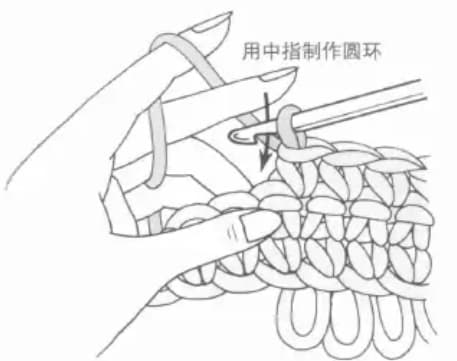
First, adjust the length of the working yarn and use your left middle finger to hold the yarn end, forming a loop foundation structure. This step is the starting preparation for the loop stitch, ensuring the yarn end is securely fixed, preparing for the wrapping operation that follows.
2Step 2
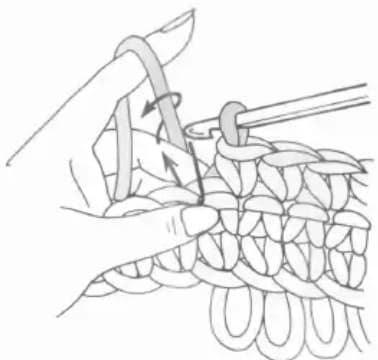
Insert the hook in the direction shown by the arrow, hold the loop with your hand, and yarn over pull through the working yarn. Note that you need to keep holding the yarn with your finger until step 3 is complete, keeping the loop structure stable.
3Step 3
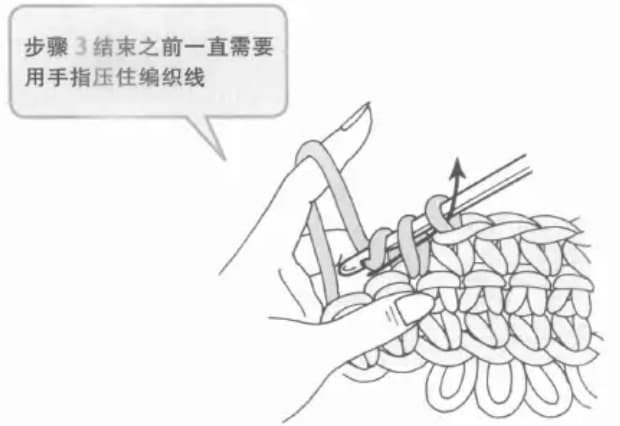
Yarn over on the hook, and pull through both loops as shown by the arrow to complete the single crochet. The single crochet loop stitch is now complete, with the loop on the outside of the stitch base, creating the unique "wrapped loop" texture effect.
4Step 4
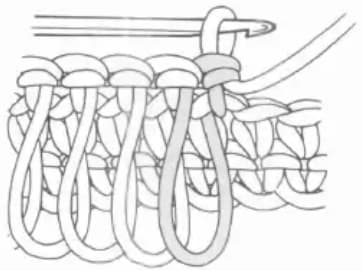
View the reverse side of step 3 as shown in the image. The side with the loop is the front side. Make sure to correctly identify the front and back during crocheting for subsequent operations.
Tips
Keep the Loop Stable
The key to loop stitch is keeping the loop stable. Before completing the entire step, make sure to hold the working yarn with your finger to prevent the loop from loosening or shifting. Using your middle or ring finger to secure it allows your other fingers to perform the crocheting operation.
Control Crochet Tension
Loop stitches can easily become too tight or too loose because you need to work around the entire stitch. Maintain moderate tension when wrapping - don't pull too tight or the loop will deform; don't make it too loose or the loop effect won't be obvious.
Identifying Front and Back
Distinguishing the front and back of loop stitches is important. The side with the loop is the front, which will display the unique wrapped texture effect. Keep the front side facing consistently while crocheting so the finished piece shows the intended decorative effect.
Common Mistakes
What if the loop keeps slipping off?
The loop slipping is usually caused by insufficient finger stability. Solution: Make sure to firmly press the yarn end and loop with your finger; try using the side of your middle finger instead of the fingertip for stability; choose a working surface with grip; slow down and ensure each step is completed steadily.
What if the loop effect isn't obvious?
An unobvious loop effect can have several causes: the loop you're working around is too small (make sure to go around the entire stitch, including both front and back loops); tension is too tight (relax a bit to give the loop enough "standing" room); or the loop position is incorrect (make sure the loop wraps around the outside of the stitch base). Adjust these factors to find the best effect.
What if the work becomes distorted after loop stitches?
Work distortion is usually caused by density changes in the loop stitch area. Solution: Slightly relax the regular single crochets next to the loop stitches to balance the overall density; or use blocking methods to keep the finished piece in the expected shape; you can also add a few extra regular single crochets at the edges to stabilize the overall structure.
Related Stitches
After mastering the single crochet loop stitch, you can continue learning these related stitches:
- : The foundation stitch for loop stitch
- Single Crochet Front Post: Works around the stitch from the front, creating a raised 3D effect
- Single Crochet Back Post: Works around the stitch from the back, creating a recessed effect
- Double Crochet Loop Stitch: Uses double crochet for loop work with a more pronounced effect
Practice Suggestions
Follow these steps to practice the single crochet loop stitch:
- First, crochet 5-6 rows of regular single crochet as a foundation
- Practice the loop stitch technique individually to become familiar with the wrapping process
- Try working loop stitches on consecutive stitches to create continuous texture
- Complete a small swatch and observe the texture difference between front and back
After completing basic practice, try crocheting some simple decorative pattern projects like loop textured coasters or decorative borders. These projects help reinforce loop stitch skills while experiencing the fun of special texture crocheting.
Loop stitch is an important technique for creating unique texture effects in crochet. Mastering it will add more decorative elements to your projects. Keep practicing and explore more exciting texture combinations!