
Introduction
Double Crochet Loop Stitch is a unique decorative stitch characterized by forming a looped coil on the outside of a double crochet while completing it. This stitch is also known as "loop double crochet" or "double crochet loop," adding dimensional texture effects to your fabric.
During the crocheting process, the working yarn is pre-adjusted to a specific length and secured, then while working the double crochet, the loop wraps around the outside of the stitch post, creating a unique ring-shaped decoration. This technique is commonly used for:
- 3D Flower Patterns: Creating raised loops on the fabric surface for added dimension
- Decorative Edges: Adding unique textures to shawls and scarves
- Creative Patterns: Combining with other stitches for special visual effects
- Artistic Crochet: Forming unique decorative lines on garments and home decor
Required Tools
Before practicing the double crochet loop stitch, prepare the following tools:
- Crochet hook : A 3.5mm or 4.0mm hook is recommended
- Yarn : Choose medium-weight cotton or acrylic yarn in a bright color for easy visibility
- Chain stitch Foundation: The loop stitch requires a chain foundation
- Double crochet Foundation: The loop stitch is a double crochet variation, so master double crochet first
Practice Preparation
Before practicing the double crochet loop stitch, crochet a row of approximately 15-20 chains as a foundation. The loop stitch requires adequate space to showcase its looping effect.
Step-by-Step Instructions
1Step 1
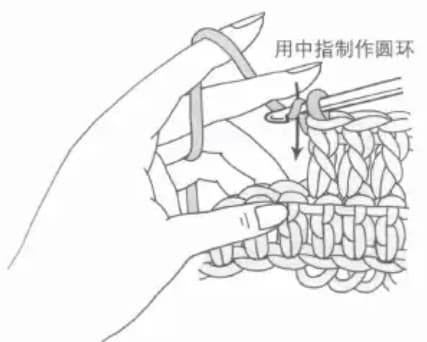
First, adjust the working yarn length to form a loop of appropriate size. Use your left middle finger to hold one end of the loop, ensuring the loop size is moderate and its position is fixed. This step is crucial for the loop stitch-the loop length determines the final loop size.
2Step 2
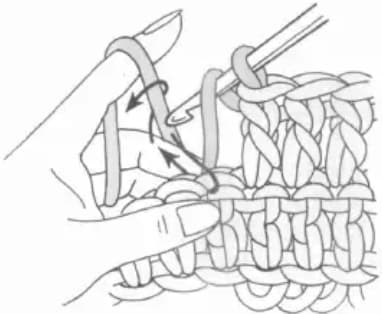
Insert the hook in the direction shown by the arrow, while using your finger to hold the loop and maintain its shape. Yarn over and pull through the working yarn. Be careful to keep the loop stable during this process, preventing it from slipping or deforming.
3Step 3
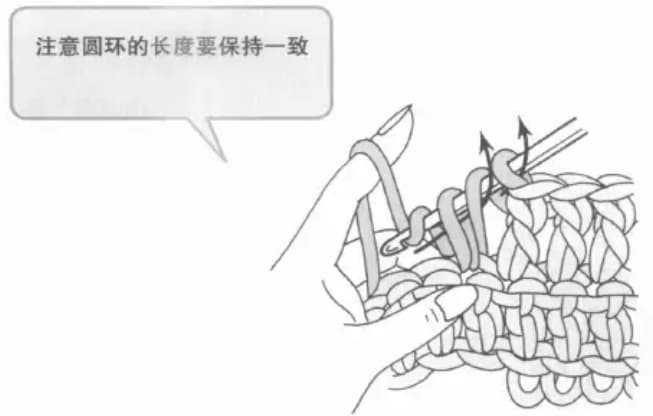
Now begin crocheting the double crochet: keep the loop length consistent. Yarn over, pull through two loops as shown by the arrow, repeat twice (this is the standard double crochet completion). When finished, the loop naturally positions on the outside of the double crochet, creating a wrapped decorative effect.
4Step 4
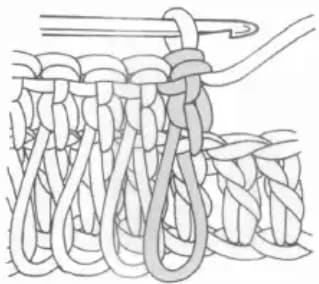
View the completed step 3 from the wrong side. You can clearly see the position of the loop-the side with the loop is the right side. This view helps you confirm the loop formed correctly and is neatly wrapped around the outside of the double crochet.
Tips
Controlling Loop Size
The loop size directly affects the final result. If the loop is too large, it will appear loose; if too small, it won't create a prominent wrapping effect. Beginners should practice with a small sample first to find the loop size that best suits their crocheting style. Generally, the loop diameter should be about 1/3 to 1/2 of the double crochet length.
Maintaining Loop Stability
Keeping the loop stable during crocheting is key to success. When holding the loop with your left middle finger, apply moderate pressure-too tight will deform the loop, too loose and it will slip. We recommend adjusting the loop shape and position before inserting the hook.
Identifying the Right Side
Identifying the right and wrong sides after completing the loop stitch is important: the side with the loop is the right side, presenting a dimensional wrapping effect; the side without the loop is the wrong side, where you can see the double crochet base structure. When crocheting continuously, ensure all loops face the same direction.
Common Mistakes
What if the loop is uneven?
An uneven loop is usually caused by the loop moving or deforming during crocheting. Solution: Fix the loop position with your finger before inserting the hook; maintain even tension while crocheting the double crochet; check after each stitch that the loop stays in the correct position. If you notice the loop has shifted, gently adjust it with the hook tip.
What if the loop is too large or too small?
Incorrect loop size results from improper initial length adjustment. Solution: Carefully adjust loop size in step 1, referencing completed stitches for adjustment; maintain consistent length each time; if loop size varies significantly, consider unraveling and re-crocheting.
What if the double crochet height is inconsistent?
Inconsistent double crochet height affects the overall loop effect. Solution: Maintain the same tension each time you pull through loops; ensure correct yarn over count (double crochet requires one yarn over); check after each stitch that the height matches adjacent stitches.
Variations and Applications
The double crochet loop stitch can be combined with other stitches to create rich effects:
- Continuous Loops: Add a loop to every double crochet, forming continuous dimensional texture
- Spaced Loops: Add a loop every few stitches, creating a regular decorative pattern
- Mixed Heights: Combine with half double crochet or treble crochet for varied height effects
- Double-sided Loops: Add loops on both right and wrong sides for double-sided dimensional effects
Related Stitches
After mastering the double crochet loop stitch, you can continue learning these related stitches:
- : The foundation stitch for the loop stitch
- : The foundation chain for the loop stitch
- Single Crochet Loop: A loop variation formed on single crochet
- Half Double Crochet Loop: A medium-height loop stitch effect
Practice Suggestions
Practice the double crochet loop stitch in the following order:
- First practice individual loop stitches on a row of chains
- Observe the difference in loop position between right and wrong sides
- Gradually increase the number of continuous loop stitches
- Try to keep loop sizes consistent
After completing basic practice, try creating simple decorative borders with loop stitches, or add loop decorations to shawl edges to experience the dimensional beauty this unique stitch brings.
The double crochet loop stitch is a special technique requiring patient practice. Mastering it adds unique dimensional texture effects to your crochet projects. Keep practicing and enjoy the fun of creation!