
Introduction
Half Double Crochet 3 Together is a commonly used decrease technique in crochet, belonging to the half double crochet cluster series. By combining 3 adjacent unfinished half double crochets into 1 stitch, you can reduce 2 stitches in a single row. This technique is often used for hat crown shaping, sleeve cuff narrowing, waist shaping, and other areas where quick stitch reduction is needed.
The principle of hdc3tog is: first work an unfinished half double crochet into each of 3 adjacent stitches (keeping the loops on the hook), then yarn over and pull through all loops at once, merging 3 stitches into 1. Similar to hdc2tog, but with one more stitch merged, creating a more dramatic decrease.
In crochet charts, hdc3tog is typically represented by an inverted T-shape with a diagonal line and a small circle at the top indicating the merge. This technique is very practical when quick decreases or special shaping are needed.
Comparison with Other Decreases
| Stitch | Stitches Combined | Decrease Amount | Best For | |--------|-------------------|----------------|----------| | Half Double Crochet 2 Together | 2 stitches | 1 stitch | Gentle decreases | | Half Double Crochet 3 Together | 3 stitches | 2 stitches | Quick decreases | | Single crochet 2 together | 2 stitches | 1 stitch | Tight decreases |
Tools Needed
Before practicing hdc3tog, prepare the following tools:
- Crochet hook : Use the same hook size as your project
- Yarn : Use the same yarn as your project
- Half double crochet basics: You should already know how to work half double crochets
Practice Preparation
Before practicing hdc3tog, crochet several rows of half double crochets as a foundation. This will help you clearly see the before and after effects of the decrease.
Step-by-Step Instructions
1Step 1
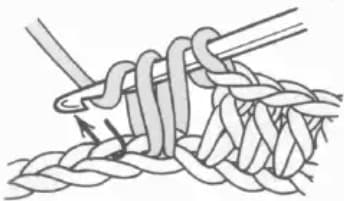
Start from an existing half double crochet foundation. First, yarn over once on your hook, insert the hook into the first stitch, yarn over and pull up a loop. You now have 3 loops on your hook. Important: Do not complete this half double crochet, keep the loops on your hook. This is called an "unfinished half double crochet".
2Step 2
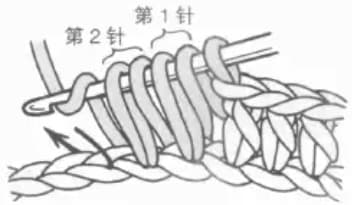
Following the arrow, repeat the same process in the second stitch: yarn over once, insert hook, yarn over, pull up a loop, keeping all loops on the hook. Then repeat in the third stitch. When finished, your hook will have 7 loops total: 1 original loop + 3 sets (2 loops each) from the unfinished half double crochets.
3Step 3
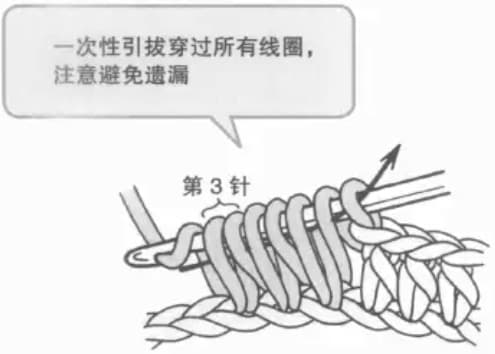
Yarn over your hook, preparing to pull through all loops at once. This is the most critical step - ensure the loops are loose enough to pull through smoothly. If the loops are too tight, you can slightly adjust your previous stitches to maintain proper tension.
4Step 4
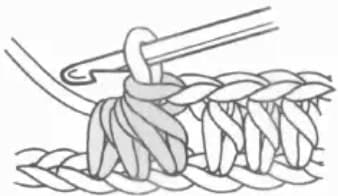
Pull the hook with yarn through all loops on your hook (7 loops) in one motion. This merges all loops into one, completing the half double crochet 3 together. Now only one loop remains on your hook, and the original 3 stitches have merged into 1, reducing the count by 2.
Tips
Keep Loops Loose
The most challenging part of hdc3tog is pulling through 7 loops at once. The key is to keep each loop slightly loose when working each unfinished half double crochet. Don't pull too tight. After each pull-up, you can gently push the loop upward to maintain looseness.
Use the Right Hook
If you find pulling through difficult, consider using a hook with a more rounded head, or practice with a slightly larger hook size. Some hook designs are better suited for decrease operations and can reduce the chance of loops falling off.
Progressive Practice
We recommend mastering hdc2tog before learning hdc3tog. The principles are the same, only the number of loops differs. Progressive practice will build a solid foundation.
Common Mistakes
What if pulling through all loops is too difficult?
This is the most common problem for beginners. Solutions: ensure each unfinished half double crochet loop stays loose; before pulling through, use your fingers to gently arrange the loops neatly; pull through with steady, not rushed, motions. If truly difficult, you can pull through in two stages: first through the front 4 loops, then through the remaining ones.
What if stitches become uneven after the decrease?
Uneven stitches after decreasing usually result from uneven tension during the merge. Solutions: after completing the decrease, gently adjust so the merged stitch aligns with surrounding stitches; maintain consistent tension for each stitch; the stitch after the decrease can be slightly relaxed to balance tension.
What if I forget where to decrease?
In complex patterns, it's easy to forget decrease positions. Solutions: use stitch markers to mark where decreases should be; mark your pattern; before decreasing, count your stitches to ensure correct placement.
Applications
Hdc3tog is commonly used in:
- Hat crown shaping: Quickly reduce stitches to form a rounded top
- Sleeve cuff narrowing: Gradually decrease from arm to cuff
- Waist shaping: Create a fitted waist effect
- Amigurumi: Create shaping points for 3D forms
Related Stitches
After mastering hdc3tog, you can continue learning:
- : The foundation stitch - understanding half double crochet is essential before learning decreases
- : The basic decrease technique for reducing 1 stitch
- : Single crochet decrease technique
Practice Suggestions
Follow these steps to practice hdc3tog:
- First, crochet a foundation chain (about 20 stitches)
- Crochet several rows of half double crochets to familiarize yourself with the basic stitch
- Practice hdc3tog every few stitches in a row
- Observe the decrease effect, ensuring the stitch count reduces correctly
- Practice keeping the edge neat after decreases
Hdc3tog is a practical decrease technique in crochet. Mastering it will help you create more varied shapes and designs. Keep practicing and enjoy crocheting!