
Introduction
Half Double Crochet 2 Together is a common decrease technique, also known as half double crochet decrease. The core operation is to merge two adjacent stitches into one half double crochet, reducing the total stitch count by 1. This technique is frequently used when you need to narrow fabric width, create waist shaping effects, or reduce volume.
In English terminology, this is called Half Double Crochet Decrease, abbreviated as hdc dec or hdc2tog. In crochet charts, it's usually represented by an inverted V-shaped symbol, indicating two stitches merged into one.
Compared to single crochet decrease, half double crochet decrease creates softer fabric with smoother transitions, suitable for projects requiring smooth decrease effects. The key to half double crochet decrease is keeping two incomplete half double crochets at the same height before merging them at once.
Tools Needed
Before starting practice, prepare the following tools:
- Crochet Hook: Recommended 3.0mm-4.0mm hook, consistent with regular half double crochet recommendations
- Yarn: Medium-weight cotton or wool yarn in a bright color for easy observation
- Scissors: For cutting yarn
Practice Suggestions
Beginners should first master the regular method before learning decrease techniques. Practice repeatedly on a small chain foundation to understand stitch changes.
You can work a few rows of regular half double crochet first to get familiar with the feel, then try decrease operations.
Step-by-Step Instructions
1Step 1
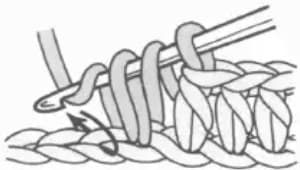
Start working half double crochet in the first stitch: yarn over once on the hook, insert the hook into the first stitch, yarn over and pull up a loop. Now you have 3 loops on the hook, this is an incomplete half double crochet. Keep these loops on the hook without letting them slip off. Then insert the hook into the second stitch and work another incomplete half double crochet in the same way.
2Step 2
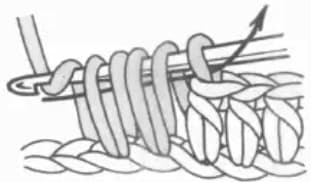
Now the hook has 5 loops total (3 loops from the first incomplete half double crochet + 2 additional loops from the second incomplete half double crochet). Yarn over on the hook, then pull through all loops at once. This is the key step of half double crochet decrease, merging two stitches into one.
3Step 3
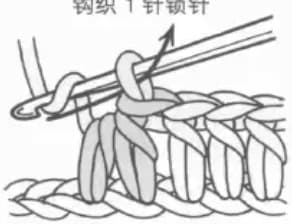
After completing the half double crochet 2 together, you can see that the original two stitches have merged into one half double crochet. Two stitches become one, showing a decreased state. If no decrease is needed, you can work 1 chain stitch to adjust and maintain the original stitch count.
4Step 4
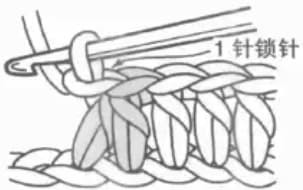
If you need to maintain the original stitch count at the decrease position, you can work 1 chain stitch to adjust. Although two stitches were merged, one chain stitch was added, keeping the overall stitch count unchanged. This technique is often used when neat edges are needed.
Decrease Principle
The core principle of half double crochet decrease is: merging two adjacent stitches into one stitch. Specifically:
- Regular Half Double Crochet: Each stitch corresponds to 1 half double crochet
- Half Double Crochet Decrease: Two adjacent stitches merge to correspond to 1 half double crochet
This "two becomes one" method reduces the total stitch count by 1. If greater narrowing is needed, you can perform decreases at consecutive positions, or merge more stitches (such as 3 stitches into 1).
Tips
Keep Loops at Same Height
When decreasing, the two incomplete half double crochets should remain at the same height. Pay attention: the loops of the first incomplete half double crochet should be slightly tightened to maintain proper height, then work the second incomplete half double crochet, ensuring both are at the same height.
Positioning Decrease Location
In complex patterns, you need to decrease strictly according to the pattern instructions. Use stitch markers to mark decrease positions to avoid missing or incorrect decreases. Decrease positions are usually marked with inverted V-shaped symbols or diagonal lines.
Combine with Increases
Decreases are often combined with increases to create various shapes. For example:
- Decrease only at one end → creates narrowing effect
- Decrease at both ends simultaneously → creates inverted trapezoid shape
- Alternate increases and decreases → creates wavy edges or shell shapes
Common Mistakes
What if stitches are uneven after decreasing?
This is a common beginner issue. The cause is usually uneven height between two incomplete half double crochets, or inconsistent tension when pulling through loops. Solution: slow down, ensure both incomplete half double crochets remain at the same height; maintain steady tension when pulling through loops, without sudden force or slowing.
How to ensure decrease is in correct position?
Incorrect decrease positions will distort the fabric. It's recommended to count stitches before starting each row, use stitch markers to mark key positions (row start, row end, decrease positions). Count again after completing a row to confirm, developing good checking habits.
What if pulling through all loops is difficult?
Half double crochet decrease has 5 loops on the hook, pulling through all at once can be challenging. Solution: keep loops slightly loose during earlier steps; don't pull loops too tight; when pulling through, gently press loops with fingers to help them pass through smoothly. With practice, this step becomes very fluid.
Application Scenarios
Half double crochet decrease is widely used in:
- Hats: Gradually decrease from bottom to top to form hat crown
- Amigurumi: Reduce stitch count in body parts to create rounded contours
- Waist Shaping: Create waist narrowing effect in sweaters and vests
- Sleeves: Gradually reduce width from shoulder to cuff
- Triangle Shawls: Decrease from center to sides or from one side to another
Related Stitches
After mastering half double crochet decrease, you can continue learning these related techniques:
- : The foundation of this technique, must first master regular half double crochet
- Half Double Crochet 3 Together: Greater decrease degree, merging three stitches into one
- Half Double Crochet Increase: The reverse operation of decrease, working two stitches in the same stitch
Practice Suggestions
Beginners are recommended to practice following these steps:
- First chain 15 stitches as foundation
- Row 1: Work 1 half double crochet in each stitch, total 15 stitches
- Row 2: Decrease at stitches 1-2 (2 stitches together), work 1 stitch in each remaining stitch, total 14 stitches
- Repeat practice to understand stitch count changes after decreasing
After completing practice, you can try decreasing at specific positions, such as decreasing only at one end to create narrowing effect, or symmetrically decreasing at both ends to create inverted trapezoid shape.
Half double crochet decrease is a fundamental technique for narrowing fabric width in crochet. Master it and you can create more varied shapes and projects. Keep practicing and explore the endless possibilities of crochet!