
Introduction
Double Crochet 2 Together , also known as double crochet decrease, is a technique that combines two adjacent Double crochet stitches into one. It is one of the most commonly used decrease methods, allowing you to effectively reduce stitch count and shape your fabric by merging two stitches together.
In English, this stitch is called Double Crochet 2 Together or dc2tog (2 double crochets together). In diagrams, it is typically represented by two double crochet symbols merged at the top.
This decrease method is widely used in various projects, such as:
- Shaping sections: Shoulders of garments, tops of hats, and other areas that need to gradually narrow
- Design elements: Creating curved shapes, waist shaping, and other curved effects
- Joining sections: Connecting two pieces of fabric together
Tools Needed
Before practicing dc2tog, gather the following tools:
- Crochet hook: A 3.0mm or 3.5mm hook is recommended
- Yarn: Choose medium-weight cotton or acrylic yarn in a light color for easy stitch visibility
- Scissors: For cutting yarn
- Stitch markers: Optional, for marking decrease positions
Practice Tip
Beginners should practice with one color of yarn first, becoming familiar with the motion before applying it to projects. Start by practicing a row of double crochet, then practice decreases in the next row.
Step-by-Step Instructions
1Step 1
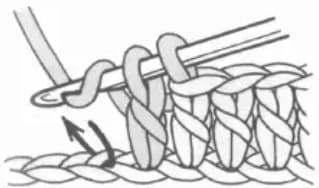
Work one incomplete double crochet into the chain, then insert your hook into the next stitch as shown by the arrow and work another incomplete double crochet. You now have 3 loops on your hook, with both double crochets in an incomplete state.
2Step 2
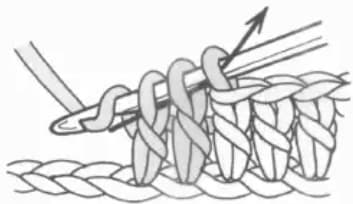
Yarn over and draw through all three loops at once as shown by the arrow. This step combines the two incomplete double crochets into one stitch, creating the decrease effect.
3Step 3
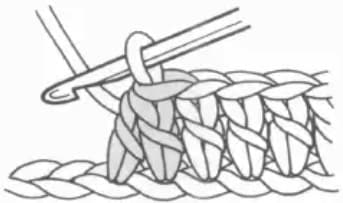
The dc2tog is complete. Two stitches have become one, showing a decrease of one stitch. You can see that where there were originally two stitches, there is now only one stitch, reducing the count by 1.
Stitch Count Change
The stitch count change rule for dc2tog:
| Original Stitches | Operation | Result | |-------------------|-----------|--------| | 2 stitches | Combine to 1 | 1 stitch | | N stitches | Combine 2 adjacent | N-1 stitches |
Counting point: Two original stitches become one stitch, reducing the count by 1.
Tips & Tricks
Maintain Accurate Insertion Position
When decreasing, pay attention to inserting your hook in the correct positions of the two adjacent stitches. If your insertion position is off, the decrease may look uneven or have holes.
Control Tension
Keep the two incomplete double crochets at consistent tension on your hook. If pulled too tight, the final draw through will be difficult; if too loose, there will be gaps at the decrease point.
Regular Decreases
For projects requiring regular decreases, use stitch markers to mark decrease positions for easy tracking. Common regular decrease patterns include "decrease every N stitches".
Common Mistakes
There's a large hole at the decrease point. What should I do?
This is a common problem, usually caused by the two stitches being spread too far apart when combined. Solution: Pull slightly tighter when completing the final draw through, making the combined stitch more compact. Also ensure both incomplete double crochet loops are the same size.
My stitch count is wrong after decreasing. What's happening?
Stitch count errors usually come from missed stitches or double decreasing. Use stitch markers to mark positions where you need to decrease, then carefully count stitches after completing. For projects with regular decreases, count total stitches after each row.
The decrease stitch looks slanted. How do I fix it?
Slanted stitches may result from inconsistent insertion positions or the two incomplete stitches being different heights. Solution: Ensure you insert into the exact center of both adjacent stitches, and keep both incomplete double crochets at the same height.
Difference from Single Crochet 2 Together
dc2tog follows the same principle as Single Crochet 2 Together , both combining two adjacent stitches into one, but with these differences:
- Different height: Double crochet decrease involves more loops and steps
- Different effect: Double crochet decrease narrows while maintaining double crochet height
- Application: Double crochet decrease is suitable for double crochet projects like double crochet hats and garments
Related Stitches
After mastering dc2tog, continue learning these related stitches:
- : The foundation stitch for double crochet decreases, master this first
- : Combines three stitches into one for a stronger decrease effect
- : A similar decrease technique used for single crochet projects
Practice Suggestions
Beginners should practice in the following order:
- Foundation practice: First crochet a row of double crochet as a foundation
- Single decrease: Practice combining two adjacent stitches into one
- Regular decreases: Try "decrease every 2 stitches" or "decrease every 3 stitches" patterns
- Closing practice: Practice using decreases to gradually close, such as closing a small round piece
Once you can complete dc2tog evenly, you can try making projects that require decreases like hat tops and garment shoulders.
dc2tog is one of the most practical techniques in crochet. Master it and you'll be able to create beautifully shaped projects!